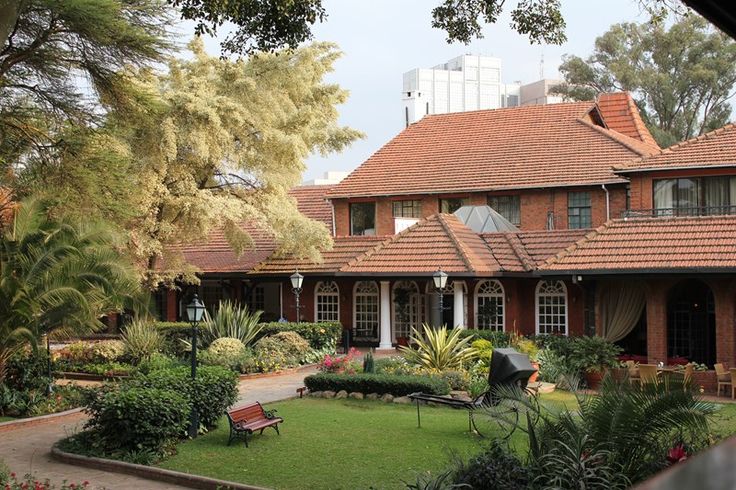
Leaving the museum behind, our next stop beckoned with the allure of a bygone era. The Norfolk Hotel, a bastion of colonial elegance, opened on December 25, 1904, by Major C.G.R. Ringer, stood as a testament to Kenya’s tumultuous past. Picturing it against a backdrop of dusty plains and towering acacias, there is still an aura of a time when intrepid adventurers and illustrious dignitaries mingled in the corridors of power.
“The Norfolk of the yesteryears, with its cool resting rooms and hot and cold baths, was civilization in the bush. With nothing in front of it except the papyrus swamp with the frogs (and sometimes the lions) and nothing behind it but barren, open land, the white railings of the hotel’s perimeter spelled comfort for early European arrivals. Rickshaws, privately owned or hired, brought the Norfolk’s patrons to its entrance.
The Norfolk Hotel was central during the First World War as a meeting place for both military personnel and civilians. Kenya became a Crown Colony in 1920,” I narrated as we marveled at the well-preserved photos in the hotel’s lobby.
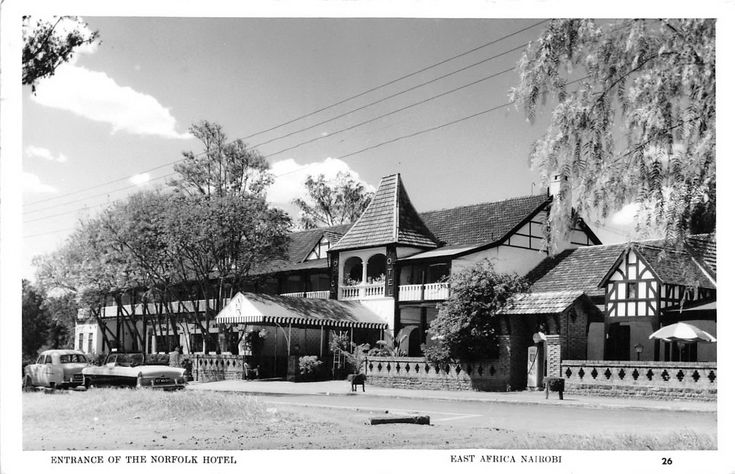
“In March 1922, in front of the verandah of the Norfolk Hotel, while guests were enjoying their midday drinks, the tragic political ‘Harry Thuku incident’ took place. An outraged and undisciplined mob of some six or seven thousand people, demonstrating in favor of the imprisoned Harry Thuku, stormed the police lines adjacent to the Norfolk. Twenty-one Africans, including a few women and a teenage boy, were killed,” I continued.
The Norfolk is located on Harry Thuku Road, named after one of Kenya’s notable political figures. Harry Thuku was a politician and one of the pioneers in the development of modern African nationalism in Kenya. After touring African districts and witnessing the neglect of African welfare by colonial officials, he denounced the Kenyan colonial government and encouraged Africans to stand up for their rights.
“As Thuku became more popular, he was arrested by Chief Inspector Satwant Bachan Singh, head of the Nairobi CID, on March 14, 1922. Two days later, on March 16, in front of the verandah of the Norfolk Hotel, where guests enjoyed their midday drinks, the tragic ‘Harry Thuku incident’ occurred. An outraged and undisciplined mob of some six or seven thousand people, led by Mary Nyanjiru, demonstrated in favor of the imprisoned Harry Thuku and stormed the police lines adjacent to the hotel. Attempts to disperse the protesters failed, and when Captain G.S. Carey was knocked to the ground, Bachan Singh gave the order to open fire.
By the end of the day, 21 people, including several women and a 15-year-old youth, lay dead. The road was renamed some years after independence to commemorate this event. Thuku was released and exiled to Northern Kenya from 1922 to 1930,” I recounted.
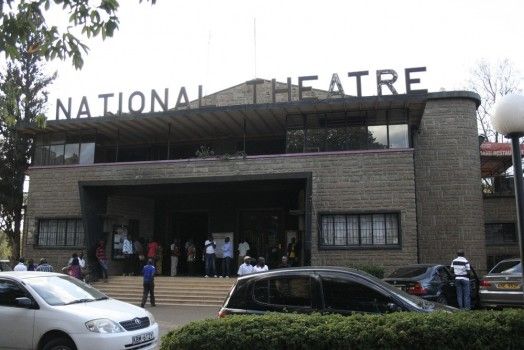
Across from us, we saw the Kenya National Theatre, Kenya’s largest proscenium theatre space. Built in the 1940s and opened in March 1951 by Sir Ralph Richardson, it initially served as a place where British soldiers, brought in to quell the Mau Mau uprising, were entertained during the colonial era.
The foyer boasts a stone “from the original foundation of the house where Shakespeare was born,” and the rosemary tree beside the door “came from Shakespeare’s birthplace garden at Stratford-upon-Avon, England, and was planted in November 1953.”
The idea of a national theatre was first proposed in 1949 when a steering committee made up of British and Indian settlers requested the colonial government to establish a venue for expressing themselves through drama, music, and art. A year later, the British government responded by launching a project for the construction of a national theatre.
The government provided a plot of land opposite the Norfolk Hotel and near the Central Police Station. From the outset, the theatre was intended for the exclusive enjoyment of the European and Asian communities in Kenya, and the choice of location was deliberate; Africans were not expected to frequent the area.
Early signs of the Mau Mau rebellion were already being felt, so the presence of a police station nearby was intended to give theatre-goers a sense of protection while acting as a deterrent for any Africans who might be tempted to venture there.
Our passion for nature and travel is reflected in our understanding of the need to experience the natural environment in a sustainable and unique way.
Our commitment to you is “The Perfect Balance between Nature & Discovery, Adventure & Luxury”…