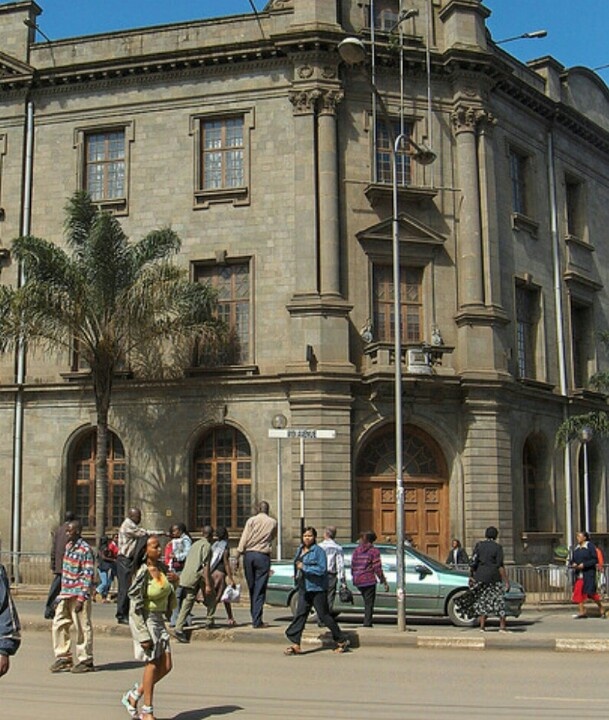
Continuing our excursion through Nairobi’s streets, we glimpsed the Khoja Mosque, also known as Khoja Jamatkhana, constructed on January 14, 1922, by the Ismaili community led by the Aga Khan. We then passed through Monrovia Street, once known as Mark Street, and I pointed out the statue of Queen Elizabeth I in Jeevanjee Gardens—formerly Victoria Gardens—unveiled by the Duke and Duchess of Connaught and presented by Alibhai Jeevanjee.
Amidst the horns and blares from the traffic, I recounted the tale of Alibhai Jeevanjee, a visionary entrepreneur who made profits from the construction of the Kenya-Uganda railway line, his legacy enduring in the heart of the city when he donated the gardens in 1906.
“Alibhai Mullah Jeevanjee was born in the Bohra community in Pakistan in 1856 and went to East Africa in 1890. He was a pioneering entrepreneur and philanthropist in Kenya when the city was still a sprawling township.
During the construction of the Lunatic Express, Jeevanjee went to Punjab, India, and brought 30,000 ‘coolies’—skilled laborers, artisans, bricklayers, carpenters, plumbers, tailors, and mechanics—for the railway project on behalf of the Imperial British East Africa Company, which ran Kenya on behalf of Britain at that time. This railway laid the foundation of modern Kenya, including the emergence of towns like Nakuru, Naivasha, Nyahururu, Eldoret, Kitale, and Kisumu.
Railway stations were needed along the ‘Lunatic Line.’ Alibhai Mullah secured the contract to build them, as well as post offices throughout Kenya along the railway route. The coolies Jeevanjee brought needed to be paid, and the Indian Rupee made its way to the interior, ushering in a cash economy,” I explained to the fascination of Olga and Vlad.
While he provided many services to the Colonial Government, Jeevanjee later grew to challenge the settler regime in search of greater equity and equality of opportunity for Indians and, eventually, all Kenyans.
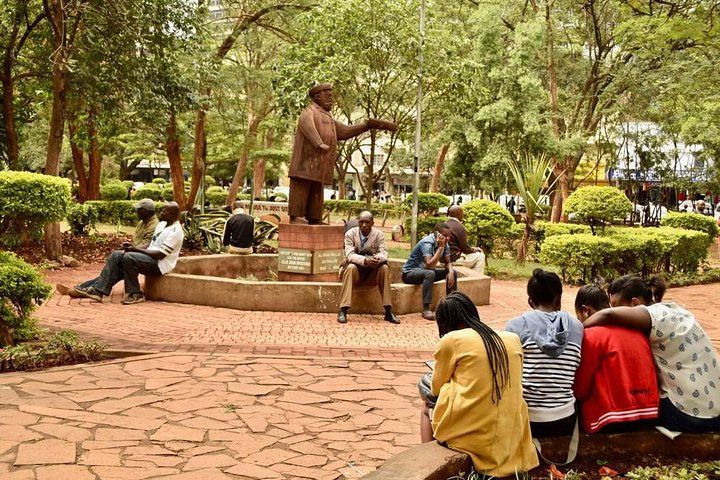
As we passed through what was once called Stewart Street—named after Sir Donald Stewart, one of the colonial governors of the Kenya Protectorate—Muidi Mbingu, as it is currently named, honors a former Kenya Power and Colonial Police employee who became the face of the Akamba freedom struggle after they were evicted from their lands and condemned to the Native Reserves in 1937. In 1938, Mbingu led a demonstration from Machakos, denouncing the colonial destocking policies, trekking 60 kilometers to Nairobi.
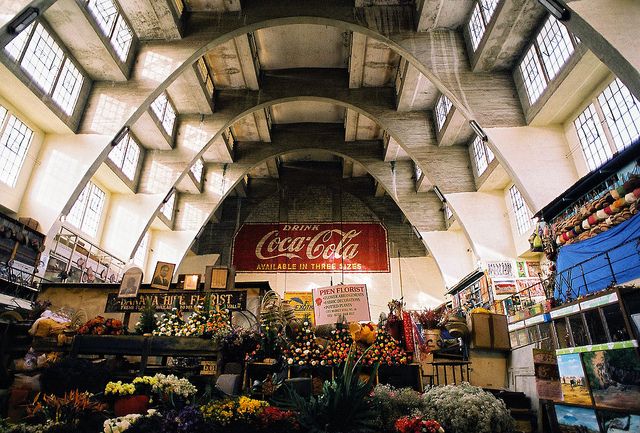
The distinct waft of fresh fish and vegetables hit our noses as we passed City Market, which has a rather fascinating relationship with Alibhai Jeevanjee.
“In 1904, the market serving Nairobians was the Jevanjee Market, built by the Indian merchant and philanthropist Alibhai Mullah. Jeevanjee Market had a brilliant future as a hub for developing trade with Europe. But this was not to be, and Jevanjee Market was blamed for the outbreak of a plague in 1908.
Allegations of unhygienic conditions rocked the market. And with Nairobi creeping ever outwards in the 1920s, the need for a competitive municipal market befitting of an advancing city was unavoidable. Subsequently, in 1932, Jevanjee’s fate was sealed. The market was brought down and replaced by the newer, shinier City Market,” I continued as Vlad took a selfie with the market in the background.
“See that street—Biashara Street (formerly Bazaar Street)—opposite the City Market?” I pointed out. “Curiously, did you know that Kenya was hit by the bubonic plague? In 1902, a number of mysterious deaths occurred on the busy Indian Bazaar in young Nairobi. The street had grown too fast, spurred by the growing trade between Africans, Europeans, and Indians. With no proper municipal facilities, filth built up, attracting rodents and scavenging animals. With them came the Bubonic Plague, claiming 20 lives between 1904 and 1906 before a future Portuguese consul diagnosed the disease.
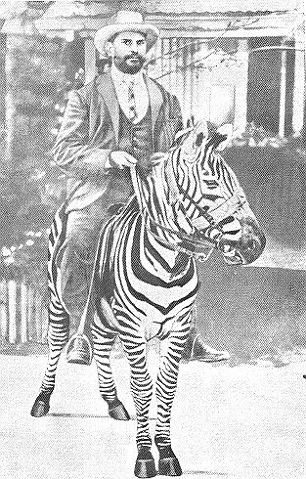
Dr. Rosendo Ayres Ribeiro appears on this scene in Nairobi, February 1900, as the first private medical doctor. It was Dr. Ribeiro who diagnosed the plague in two Somali patients and reported it. The Medical Officer of Health, with no experience of tropical diseases, panicked at the news, ordered the Indian Bazaar evacuated and burnt to the ground.
Dr. Ribeiro’s surgery went up in flames with the rest. In recognition of his services, the government gave him a concession of 16 acres of land in the township. The good doctor had arrived in the future Kenya Colony two years before. Goan by descent, he would serve as the Portuguese consul between 1914 and 1924. Before that, he was famously known as the zebra-riding doctor. He had managed to train a zebra and ride him around town for house calls.”
Our passion for nature and travel is reflected in our understanding of the need to experience the natural environment in a sustainable and unique way.
Our commitment to you is “The Perfect Balance between Nature & Discovery, Adventure & Luxury”…